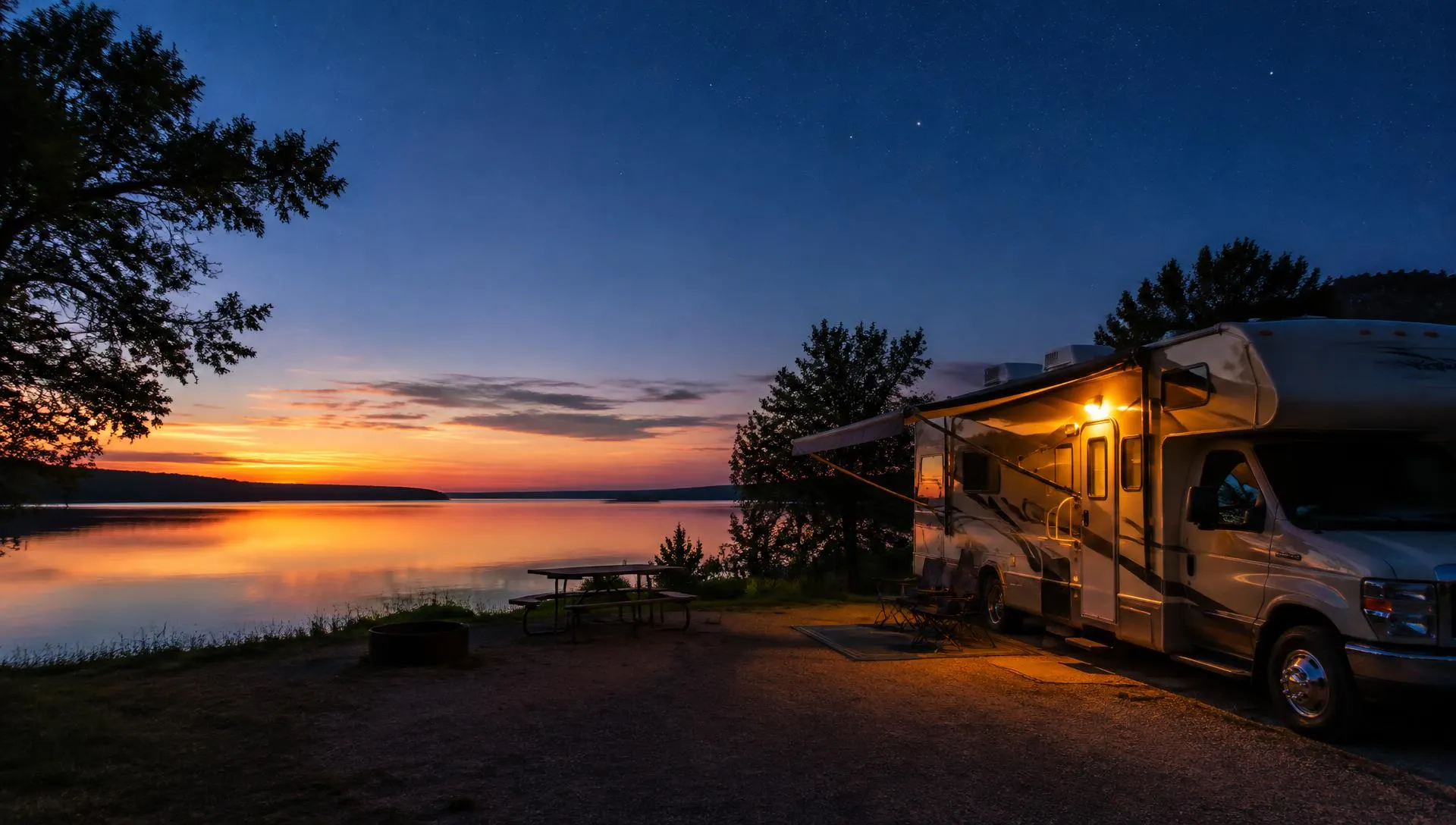
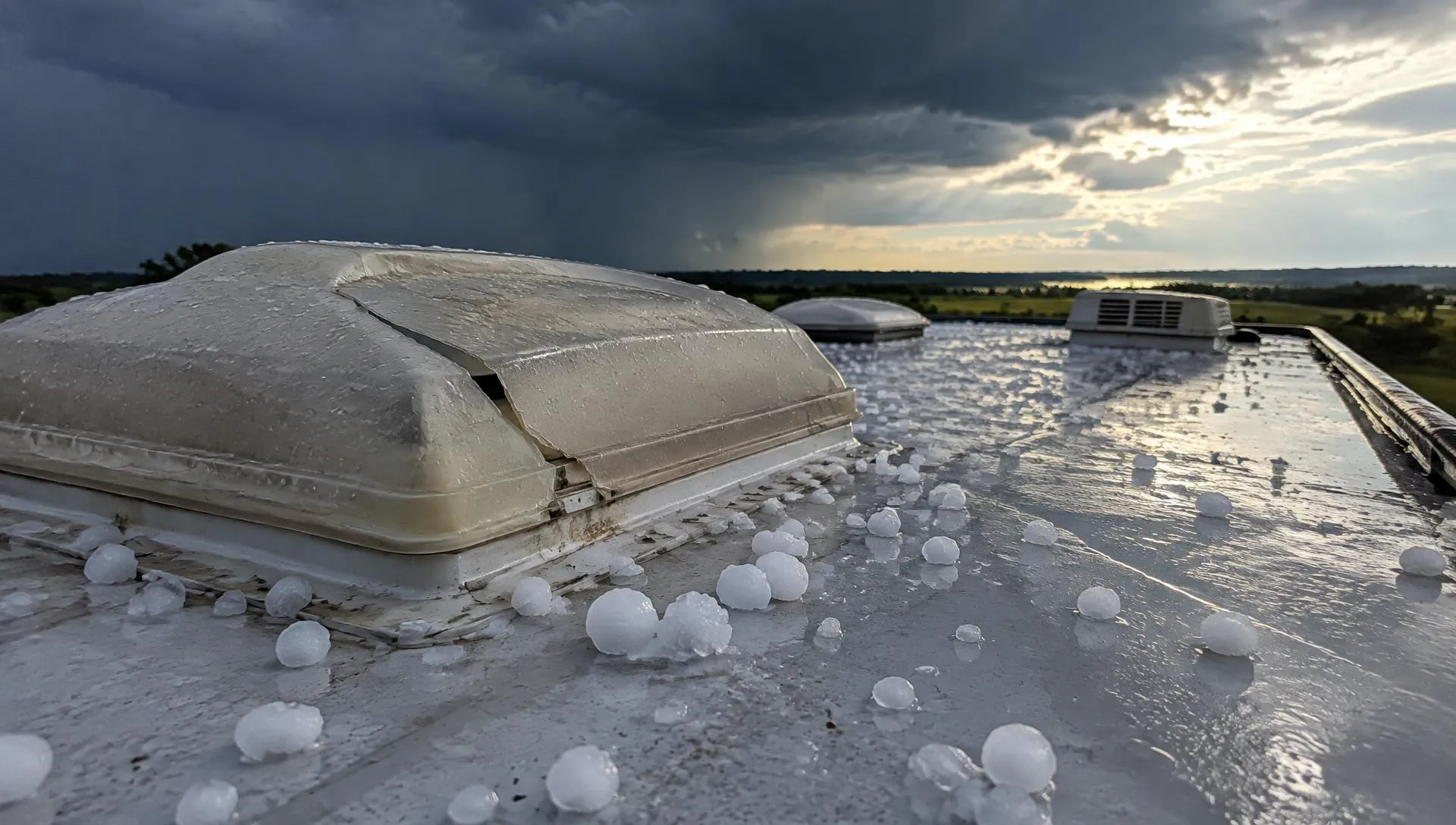
North Texas is known for its spring storms, and hail is part of life in the Metroplex. Many RVs sit outside at storage lots or in driveways, with nothing over them but sky. When hail comes through, the roof takes the hit, and damage isn't always easy to see from the ground.
Why hail damage matters even when it looks small
An RV roof isn't like a house roof. Many are a thin membrane or fiberglass over plywood, with vents, skylights, an A/C unit and seams all sealed together. A small crack or puncture can let water in slowly. That water soaks into the roof decking and walls, and by the time you see a stain inside, the damage underneath can be serious. Catching hail damage early is the key.
What to check after a storm
From the ground first. Walk around the RV and look at:
- Roof vents and skylight covers for cracks or missing pieces.
- The A/C shroud for cracks or dents.
- Awning fabric for holes and the awning arms for damage.
- Windows, lights and the front and rear caps for cracks or dents.
On the roof, only if it's safe. Not every RV roof is made to walk on, so check your owner's manual first, and never go up when it's wet or windy. If you do go up, look for:
- Punctures, tears or bruises in the membrane.
- Cracked sealant around vents, edges and seams.
- Cracked skylights and vent lids.
- Dents in fiberglass or aluminum.
Inside afterward. In the days after the storm, especially after the next rain, look at the ceiling around vents and corners for any new stains, and push gently on the ceiling for soft spots.
Take photos right away
Photograph any damage you find, inside and out, with the date. If you plan to file an insurance claim, photos and a written inspection help. Every policy is different, so check with your insurance company about what's covered.
Temporary protection
If a vent cover or skylight is broken, cover the opening to keep rain out until it can be repaired. A tarp tied down well can help, but don't leave it on long, because it can trap moisture and rub the roof.
Repair options
Small cracks and punctures can often be sealed. Broken vents and skylights can be replaced. If the roof has widespread damage, a new roof system may be the better long-term choice. An inspection tells you which one you're dealing with.
Prevention
- Store your RV under cover when you can, especially in spring.
- Use a roof inspection before and after storm season.
- Keep up with sealant so small cracks don't become big problems.
Get a roof inspection
RV Angels offers RV roof inspection, leak detection and resealing and RV roof systems across the DFW Metroplex, including Plano and the north suburbs. Call or text Rick at (833) 589-5905.