
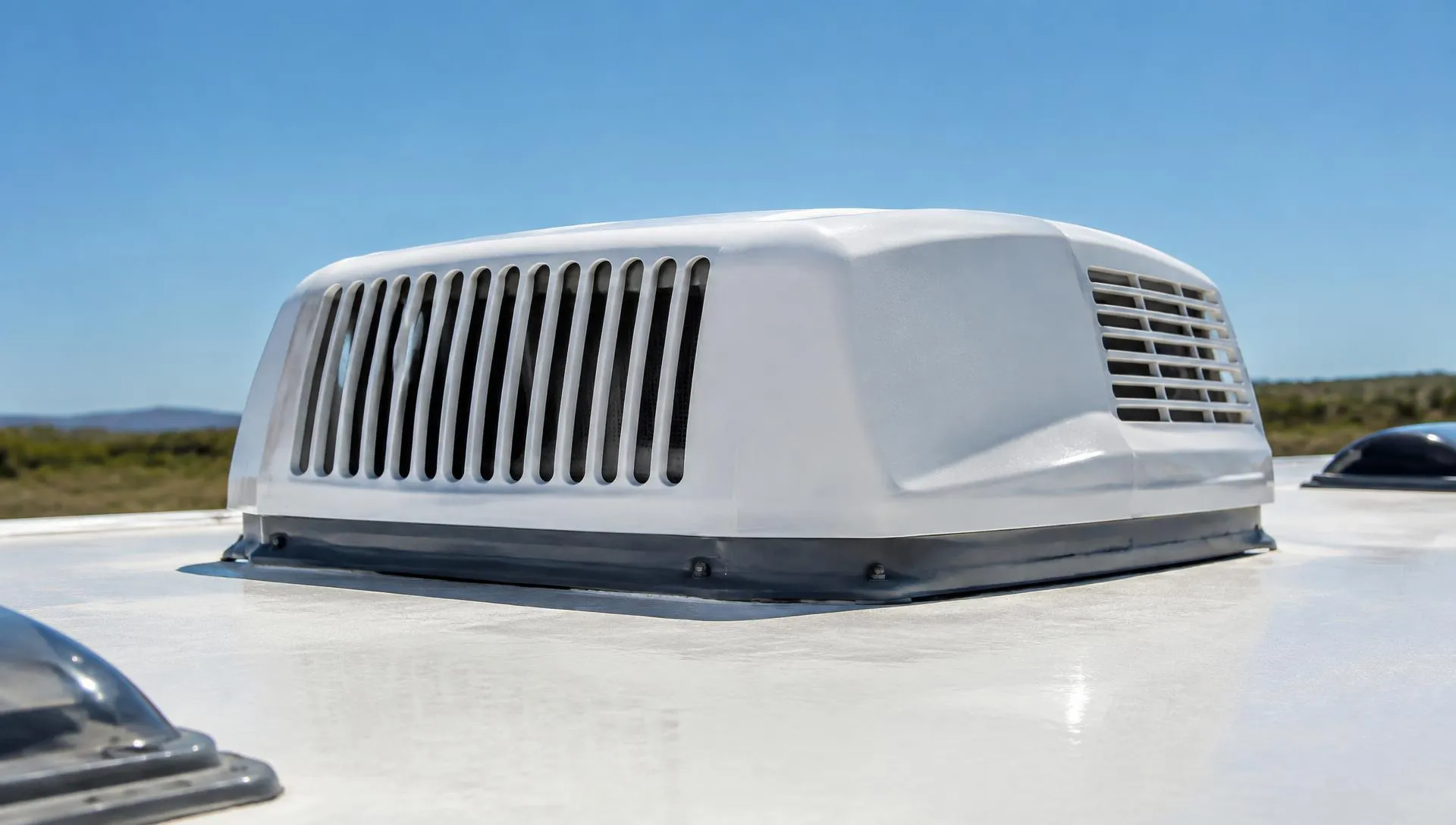
Anyone who has camped through a Dallas–Fort Worth summer knows the feeling: it's late afternoon, the sun has been beating on the roof all day, and the A/C is running nonstop but the inside still feels warm. RV air conditioners work harder in Texas than almost anywhere, and when one starts falling behind, the cause is often something you can check yourself.
Understand what an RV A/C can do
An RV air conditioner cools the air by a certain number of degrees, not to any temperature you set. On a 105-degree day, with the sun on a dark roof, even a healthy unit may not bring the inside down as far as you'd like. That doesn't always mean it's broken. But if it used to keep up and now it doesn't, something has changed.
Clean the filters first
Dirty filters are the number one reason RV A/Cs lose cooling. The filters sit behind the vent cover on the ceiling. When they clog with dust and pet hair, air can't move through the unit. Pull them out, wash them with warm water, let them dry and put them back. In summer, check them every couple of weeks.
Check your power
RV air conditioners need steady voltage. Weak campground power, a long or thin extension cord, or running the microwave, water heater and A/C all at once can cause low voltage. Signs include the A/C cycling on and off, lights dimming when it starts, or the breaker tripping. Low voltage doesn't just reduce cooling; it can shorten the life of the compressor.
Look at the roof unit
From the ground, look at the A/C shroud on the roof. Leaves, pollen, cottonwood fluff and debris can block the coils, especially if you park under trees. Blocked coils mean the unit can't release heat, so it cools less.
Help it out
Simple habits make a big difference in Texas heat:
- Start the A/C early in the morning, before the camper heats up.
- Close blinds and shades on the sunny side.
- Use your awning to shade the side of the RV.
- Park so the biggest windows face away from the afternoon sun when you can.
- Cook outside on hot days to keep heat out of the RV.
Signs it needs a professional
- The fan runs but the air isn't cold.
- The unit hums but won't start.
- Ice forms on the coils or the vents.
- Water drips inside from the A/C.
- The breaker keeps tripping.
- It makes new loud noises.
These can point to a failed capacitor, a refrigerant or compressor problem, a bad thermostat or control board, or an electrical issue. RV A/C units are sealed and use high voltage, so these repairs are best left to a technician.
Repair or replace?
Sometimes a repair is a quick fix, like a capacitor. Other times an older unit has simply worn out, and replacing it costs less in the long run than repeated repairs. A good technician will explain both options honestly so you can decide.
Get your cool back
RV Angels handles RV A/C repair and replacement and RV electrical repair at your home, storage lot or RV site across Fort Worth and the DFW Metroplex. Call or text Rick at (833) 589-5905.