
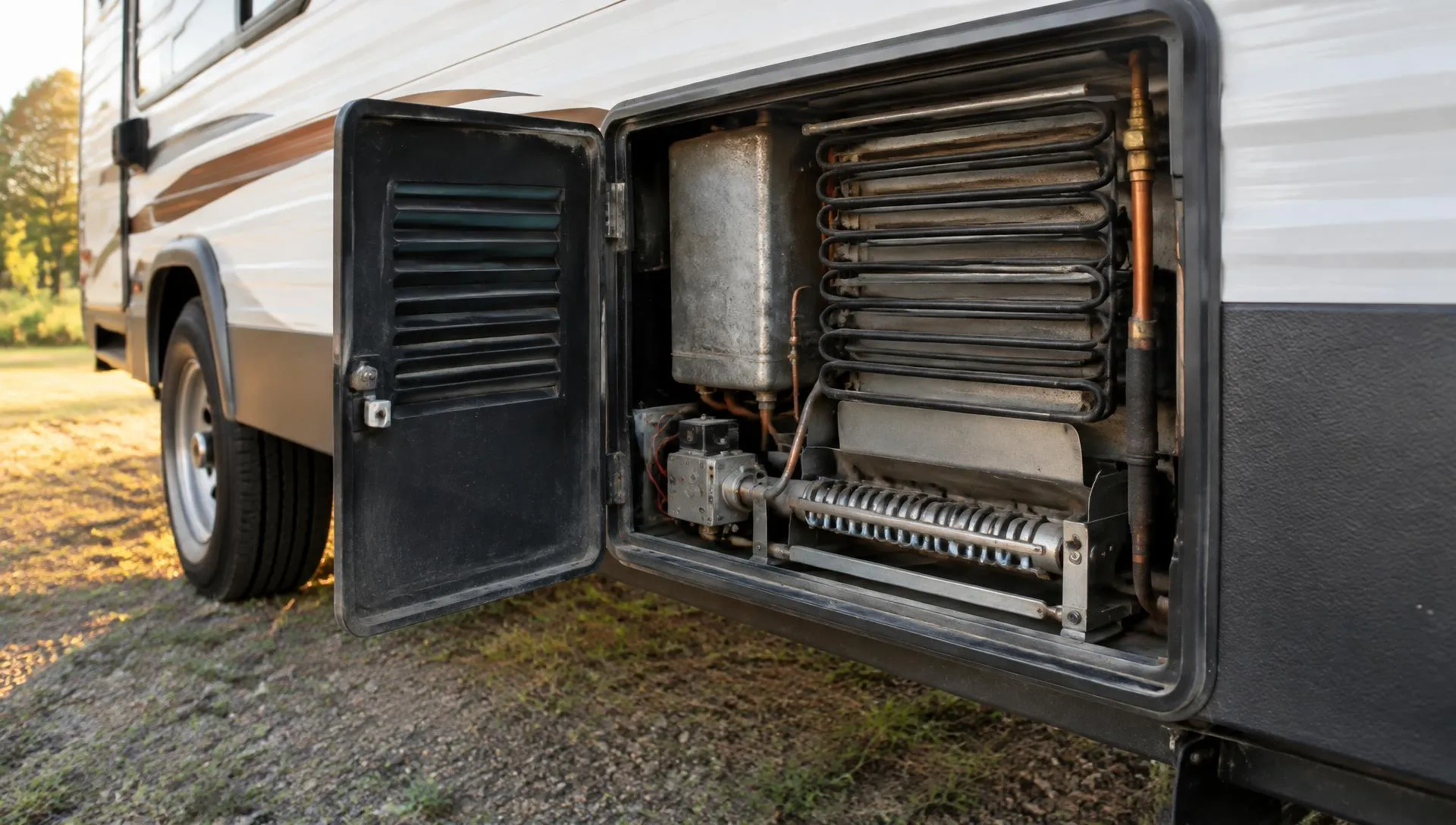
Few things ruin a camping trip faster than opening the fridge to find everything warm. RV refrigerators work differently than the one in your kitchen, and they're sensitive to things a home fridge never worries about. Before you assume the worst, here's what to check.
Know which kind of fridge you have
Most RVs have one of two types:
- Absorption fridges run on propane or 120-volt electric (some also on 12-volt). They use heat to cool, and they're quiet.
- Residential or 12-volt compressor fridges work more like a home fridge. They need steady electric power, and when you're not plugged in, they often run off the batteries through an inverter.
The type you have changes what to check.
Checks for absorption fridges
- Is the RV level? Absorption fridges need to be fairly level to work right. Running one far out of level for long periods can damage it.
- Is it set to the right mode? Make sure it's on the power source you have, like gas when you're not plugged in, and that the propane is on.
- Give it time. They can take many hours to cool down from warm. Pre-cool before a trip.
- Check the outside vent. Behind the fridge, there's an access panel on the side of the RV. Look for blockages like bird nests, leaves or wasp nests. Good airflow is critical.
- In Texas heat, an absorption fridge can struggle in direct afternoon sun. Parking so the fridge side is shaded helps.
Checks for residential fridges
- Is it getting power? Check the breaker and the outlet.
- Is the inverter on when you're not plugged in?
- Are the batteries charged? A residential fridge can drain batteries fast when off shore power.
Checks for all fridges
- Don't overpack it. Air needs to move inside.
- Keep the door closed as much as possible.
- Check the door seals. A seal that doesn't close tight lets cold air out.
- Make sure the thermostat setting hasn't been changed.
- Check fuses for the fridge's control board; many fridges need 12-volt power for their controls even when running on gas or 120-volt.
Warning signs to stop and call
- A strong ammonia smell or yellow residue behind an absorption fridge can mean a leak in the cooling unit. Turn it off and have it checked.
- Error codes or flashing lights on the control panel.
- It works on one power source but not another.
- It stopped cooling suddenly after working fine.
Keep it working
- Clean the outside vent area regularly.
- Level the RV when parked.
- Pre-cool before trips.
- Have the fridge checked during routine maintenance.
Get it fixed
RV Angels handles RV refrigerator and appliance repair and RV electrical repair at your home, storage facility or RV site across Frisco and the DFW Metroplex. Call or text Rick at (833) 589-5905.